


Osteochondrosis of the chest does not appear as often as osteochondrosis in other parts, but it is just as young as other types of this disease.Today, it is diagnosed in 20-year-old young people, which is related to both lifestyle and nutrition.
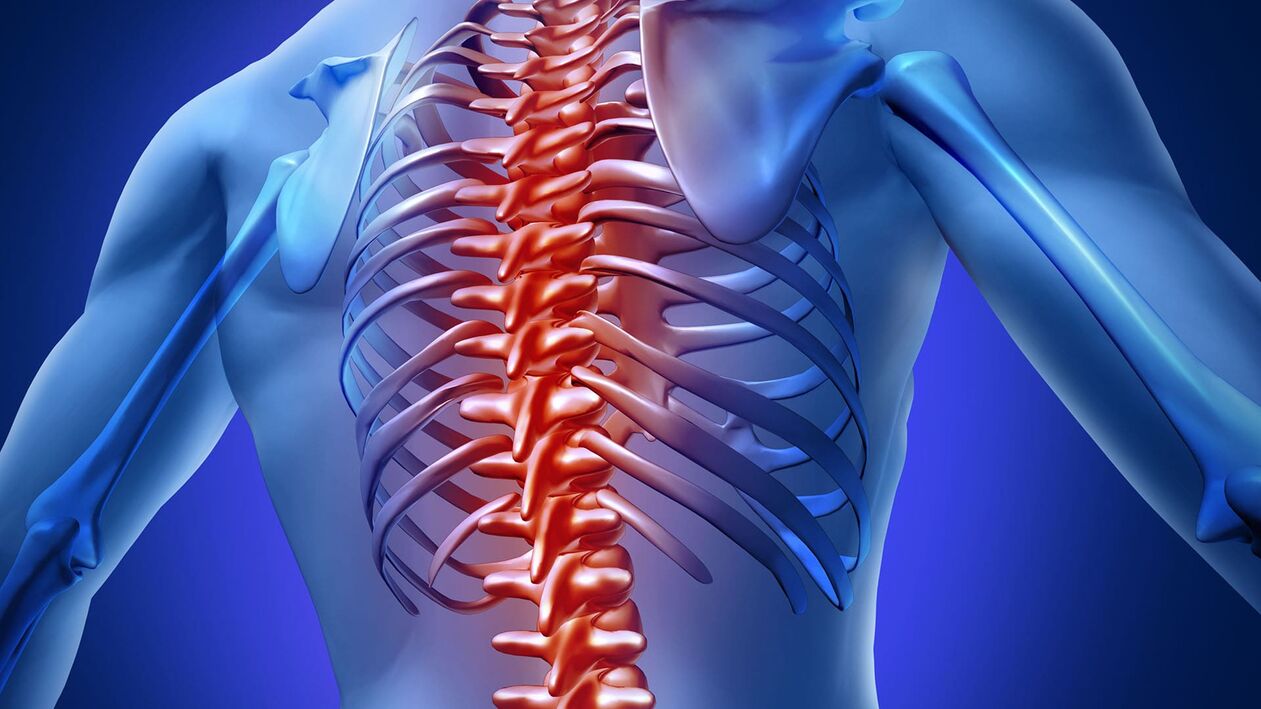
Thoracic osteochondrosis - what is it?
Thoracic osteochondrosis is a degenerative process that occurs in the spine between the 8th and 19th vertebrae.These vertebrae form the thoracic spine.And it is between them that changes occur in the spinal discs when this type of osteochondrosis occurs.But due to the fact that this part of a person's back is not as mobile as the others, the changes that have occurred do not manifest themselves until it is too late and the disease progresses to an advanced stage where treatment becomes very problematic.
That is why it is so important to pay special attention to the first symptoms of the disease and take measures to prevent the development of the disease.
Symptoms
It is worth remembering that the initial stages of thoracic osteochondrosis do not manifest themselves in any way.That is why this type of disease is dangerous.That is why it is very important immediately, when the first signs appear or if there is a hint of them, to consult a doctor and carry out all the necessary tests and examinations.
Osteochondrosis is manifested by the following symptoms:
- Feeling of difficulty breathing.
- A feeling of tightness throughout the chest.
- Bending becomes increasingly difficult.Moreover, this condition is progressive.
- A feeling of freezing in the limbs.This is due to the reduced blood circulation in them.
- Chest pain.
- There may be a burning sensation in the legs and feet.
- Keratin coatings (nails and hair) become brittle.
- It is accompanied by thoracic chondrosis, the symptoms of which are similar to those of osteochondrosis.
- The gastrointestinal tract begins to work intermittently.
- Burning in chest.
- Burning in the region of the stomach.
- Pectalgia - pain in the front of the chest.
- In men, potency decreases.The genitourinary system begins to malfunction.
- The person feels sick.Moreover, this condition also progresses.
- Headache of varying severity, including migraine.
- Neuralgia of the chest, especially those located in the ribs.
- On the left side of the body, pain similar to that which occurs in cardiovascular diseases may appear.
- The pain can affect the liver and gallbladder.
- Back and chest often reflexive.
- The appearance of herpes zoster (herpes zoster).
- Signs of thoracic osteochondrosis in women include pain in the mammary glands.
- Discomfort in the throat and difficulty swallowing.A cough may occur as if the larynx is irritated.
The appearance of several of these symptoms of osteochondrosis of the chest requires an immediate and complete examination to clarify the diagnosis.
Dorsago and dorsalgia

Most often, thoracic osteochondrosis manifests itself with symptoms and sensations in which the patient experiences pain of varying duration and intensity.All pain symptoms are classified into two groups:
Dorsago - short-term sharp pain.They occur when a person performs a monotonous load, that is, the muscles are in one position for a long period of time.The muscles are overstretched, causing sharp pain (neuralgia), which can also be accompanied by difficulty breathing.Dorsago is more common in women than in men.
Dorsalgia is a persistent pain.They become more pronounced when a person inhales.Initially, the discomfort is mild and gradually increases.After 4 weeks, they become more pronounced and sharp.The nature of the pain may be pulling, cutting, stabbing, or other types.
Pain in osteochondrosis of the chest is localized in the chest, shoulder blades, ribs, collarbones and on the sides in the rib area.
What happens at the very beginning of the disease
The initial stage of the disease does not manifest itself or manifests itself in very mild, insignificant ways.You should pay special attention to symptoms such as:
- I felt stiffness in my movements.
- Range of motion is reduced.
- There are signs of discomfort when bending, turning, stooping or bending.
- Pain in the area between the shoulder blades in the chest.
These are sure signs of osteochondrosis of the chest, and to miss them means to transfer the disease to the next, more severe stage.
Chest pain

The main symptom that accompanies all stages of the disease is pain.It can be located all over the body up to the waist area.So, pain most often affects:
- The part of the back between the shoulder blades.
- Collarbones and areas below them.
- Ribs and parts of the body below them.
- Cardiac region.
- Pancreatic region.
Due to the fact that the pain affects vital organs, such as the heart, thoracic osteochondrosis is confused with other diseases and treatment is prescribed incorrectly.
The thoracic spine consists of 11 vertebrae.And each of them, when damage and degenerative processes occur, causes a certain type of pain or negative changes in various organs.So, to distinguish the pain in the sternum in osteochondrosis from heart problems, you need to understand how the pain differs in both cases.In addition, when chronic diseases appear, one should be aware that they can be caused by degenerative processes in the spine.
Categories |
Heart problems |
thoracalgia (chest pain) |
The nature of pain |
The pain has the character of an attack when the thoracic region is affected, but may be either aching or pressing. |
Shooting sensation, burning, aching pain. |
Place where pain occurs |
Pain is felt on the back, the pain is localized behind the sternum. But it can radiate in all directions, both to the shoulder and down below the ribs. |
The pain is often localized or radiating.But in any case, it is localized exactly at the level where the vertebra in the chest area is affected.The pain radiates to the collarbone, shoulder blade and back.Women are more likely to experience discomfort in the breast area. |
Duration |
It occurs spontaneously and does not last long, up to 15-20 minutes, but if it is a heart attack, it can appear for a longer time. |
It can last for several moments or, on the contrary, have a monotonous, prolonged character, which is very exhausting for a person. |
Causes of exacerbation of the condition |
Stressful situations, increased heart load during physical activity.Prolonged stay in a horizontal position. |
An awkward position, sharp turns, bends, bends, palpation of the ribs or those areas where pain is felt. |
If your heart hurts, then to know how to determine that it is a cardiovascular problem, you need to take the appropriate medicines and see if the symptoms disappear.If not, then these are most likely signs of osteochondrosis.
A feeling of tightness in the chest
This feeling is reminiscent of the feeling when you can't take in as much air as you want.The so-called incomplete breathing occurs.A feeling of tightness in the chest may be accompanied by pain in this area.Shortness of breath occurs with osteochondrosis.
This tightness in the chest can also occur with other illnesses, such as pneumonia or heart problems.And to understand why the compression occurred, it is worth measuring the number of heartbeats per minute.If it is 100 or more, then it is most likely a lung or heart disease.But if there are less than 100 beats, then with almost complete certainty we can say that the cause of incomplete breathing is thoracic osteochondrosis.
Other symptoms
With the development of osteochondrosis of the chest, additional signs and symptoms of the disease are added to the pain syndromes, such as:
- Numbness of the upper and lower limbs - goosebumps on the skin.
- Then a tingling occurs.It can appear in one limb or all at once.
- Excessive sweating occurs, which is situational in nature, regardless of external conditions.
- Increased heart rate.
- Cold sweat may appear on the forehead and even on the body.This condition resembles panic attacks.
If such symptoms appear for the first time, you should definitely take a calm and relaxed position, drink nitroglycerin and call a doctor.Because these may be symptoms of a heart attack, especially if all of the above is accompanied by chest pain.It pays to listen to yourself.If after taking nitroglycerin the condition improves, then this is most likely a problem with the heart, and if not, then most likely these are symptoms accompanying thoracic osteochondrosis.
In addition, symptoms such as:
- Digestive disorders - this can be irregular bowel movements, accompanied by both constipation and diarrhea.
- Abdominal pain of unknown etiology often occurs.
- Abdominal bloating and increased gas production may also occur.
- Exacerbation of gastritis.
- Nausea occurs and even vomiting may occur.All this can be accompanied by loss of appetite.
In addition to all of the above, the symptoms of thoracic osteochondrosis in men include disorders of the genitourinary system, which is most clearly manifested in a decrease in potency.
But the features of the symptoms of thoracic osteochondrosis in women include pain due to pathologies of the mammary gland.If pain in the mammary glands torments a woman, then in order to rule out diseases of the mammary glands and confirm breast osteochondrosis, you should visit a mammologist.
The appearance of pain and the appearance of various diseases with damage to various vertebrae in the thoracic region is expressed as follows.
Thoracic Vertebra Number |
Accompanying pain |
| 1 thoracic vertebra | When the first thoracic vertebra is damaged or degenerative changes occur in it, numbness of the upper limbs occurs, both in one and two at the same time. The pain spreads to the shoulders and forearms.May radiate to hands. The muscles of the back of the neck tense up. |
Second |
A state of panic attacks may occur;one is accompanied by a feeling of fear.The heart beat is lost. |
third |
The pain can spread to different parts of the chest.Cough often occurs with thoracic osteochondrosis, bronchitis, asthmatic conditions and other diseases of the respiratory tract. |
Fourth |
The functioning of the gallbladder and bile ducts is impaired.Dyskinesia and gallstones may occur.There will also be pain on the right side in the shoulder and head. |
Fifth |
Liver problems, insufficiency of hematopoiesis and blood circulation.Hypotonic conditions and the associated feeling of chronic fatigue.Arthritis. |
Sixth |
Malfunctions of the gastrointestinal tract.Often problems with the sixth thoracic vertebra are accompanied by heartburn and diabetes. |
Seventh |
Gastrointestinal problems - duodenal ulcer, heartburn, increased acidity, hiccups, nausea.General weakness of the body. |
eighth |
In this case, the spleen suffers.The body's immune system does not work, resulting in immunodeficiency. |
ninth |
Allergic manifestations. |
The tenth |
Violation of the water-salt balance and related kidney malfunctions.Arteries become calcified, which sharply reduces their elasticity. |
The eleventh |
A wide variety of skin problems ranging from dryness to psoriasis. |
What other pain syndromes exist in osteochondrosis of the chest?
It is important to understand that pain is the companion that always accompanies osteochondrosis.It can manifest itself either very weakly, or it can lead a person to a state in which he will experience constant stress, since the pain is so strong that he will not even be able to take a comfortable position.
Speaking in general about pain, it is worth considering that it should be divided into:
- Local (local).
- Distant.
Local pain occurs right around the area of the spine where degenerative changes have occurred.When a person is worried about thoracic osteochondrosis, the pain will be localized in the back and neck.The amplitude of possible movements decreases and stiffness appears.All this is accompanied by either short-term pain, or it is constant.
In distant pain, areas of the abdomen, heart area, arms, even legs are affected.There may be a sensation of pressing, burning and tingling.It is very important that remote pain is accurately diagnosed so that its appearance is not confused with another disease.
Thoracic osteochondrosis neuralgia is characterized by such localization of pain that it is even difficult for the patient to take a breath.Intercostal neuralgia most often occurs precisely because of osteochondrosis in the thoracic vertebrae.But it is worth noting that there is no feedback.That is, neuralgia does not lead to osteochondrosis.But neuralgia can be triggered by rib fracture or other types of injuries.In order to find out whether the neuralgia occurred precisely because of osteochondrosis, it is worth understanding how different the sensations are with these changes in the body.
| Main signs of neuralgia and osteochondrosis | Neuralgia |
Osteochondrosis |
Kind of pain |
The pain is sharp, piercing.It looks like an injection. |
The pain is rather painful with a burning sensation. |
Location of pain |
On the sides of the body where the ribs are located. | In the area and between the shoulder blades, in the back and in the armpits. |
Time of onset of discomfort |
The pain intensifies during a sigh or while turning. | Pain in thoracic osteochondrosis appears after prolonged stress on the body, that is, towards the end of the day.As a rule, it disappears or decreases after rest, during the day or at night. |
Reasons

Thoracic osteochondrosis occurs as a result of several of the following reasons:
- Hereditary factor.
- Unnecessary and excessive physical activity.
- Lifting a weight from an incorrect position.
- Lack of physical activity, which deprives a person of sufficient blood circulation in all tissues.
- Postural defects (curvature of the spine, for example, thoracic scoliosis).
- Injuries, damage or bruises to the chest and spine.
- Uncomfortable shoes, especially those that lead to an incorrect position of the spine - high heels.
- Bad habits.
- Frequent stressful situations.
- Exhausting physical labor.
- Disorders in the blood supply of the spinal cord.
- Degenerative-dystrophic changes in the bone structures of the spine.
- Changes in the cartilaginous tissues of the spine.
- Hypothermia.
- Any changes in the intervertebral discs, including spinal hernias.
The period of pregnancy in a woman can affect the formation of thoracic osteochondrosis.This is due to the fact that the load on the spine increases along with the cost of resources.As a result, there is a shortage of micro- and macroelements, as well as vitamins.
Excess body weight.In addition, it is enough to be 10% above normal weight to increase the load on the entire spine.
Neuromuscular shock absorption disorders.This occurs when the muscle does not fully compensate for the shock loads that can affect the body.As a result, a strong "blow" falls on the human skeleton, namely the spine.Damage occurs as a result.
Osteochondrosis can occur only under the influence of several factors, as in principle any disease.Therefore, what can be excluded from the list of reasons must be removed.For example, bad habits, lack of physical activity or heavy lifting.Take control of stressful situations.
Signs in the subacute stage
The subacute stage occurs when the acute stage has passed.During this period, a person no longer experiences difficulty breathing.There is no pronounced pain, the symptoms become weaker.A person falls asleep more easily because it is easier for him to assume a comfortable position while sleeping.
To prevent re-exacerbation of the subacute stage, you should avoid:
- Weight lifting.
- Making wrong turns.
- Do not take static positions for a long time, especially if they are unnatural for the spine.These poses also include sitting.
- Hypothermia.
Usually the subacute stage lasts about 2 weeks.If the regimen and the doctor's recommendations are not violated, most often a remission occurs, in which all symptoms disappear.In addition, the patient's task is to prevent the exacerbation of osteochondrosis of the chest through treatment, for example, with methods of exercise therapy, folk remedies and maintaining a healthy lifestyle, including a balanced diet.
But if the following sensations occur during the subacute stage, then you should pay close attention to them:
- Renewed stiffness and inability to raise your arms, even if not accompanied by pain.
- Increasing pain if it has not completely disappeared or the pain attacks last longer.
- Dizziness and feeling sick.
As soon as this happens, it is possible that the subacute stage turns into an acute one again.You should consult a doctor and fully describe the sensations that arise.
Degrees
After the symptoms have alerted the person and he has consulted a doctor, a comprehensive examination is prescribed.During which, if osteochondrosis of the thoracic region is confirmed, the doctor will determine the extent of the disease.
First degree
Osteochondrosis of the 1st degree of the chest is characterized by the appearance of changes in the intervertebral disc.As a result, already at this stage, protrusions can appear and the disc can protrude into the spinal canal.But at this stage there is no rupture of the annulus fibrosus.In the first degree of the disease, pain syndromes do not appear.
Second degree
In the second stage, discomfort appears in the spine.There may be obvious pain, dizziness and a feeling of nausea.In the second stage, the discs protrude into the spinal canal so intensively that they lead to the rupture of the fibrous ring, which leads to the formation of intervertebral hernias.
Third degree
The stage of active manifestation of intervertebral hernias with all the resulting consequences, such as pain and limited mobility.
Fourth degree
The elasticity of the intervertebral discs is completely lost.In addition to pronounced hernias, destruction of the bone structures of the vertebrae is also observed.Bone growths appear - osteophytes.
Diagnosis
Many who have encountered the signs of this disease for the first time are concerned about the question - how to determine osteochondrosis in the chest region?
The disease is insidious, as it may not manifest itself for a long time or may be disguised as other diseases.In this regard, when the patient consulted a doctor, he was already diagnosed with a progressive advanced stage of osteochondrosis.
Therefore, it is important as soon as the first suspicions appear with the first symptoms of the disease, to immediately consult a doctor and conduct a comprehensive examination in order to make an accurate diagnosis, determine the stage and correctly prescribe comprehensive treatment.Even if the doctor prescribes only drug treatment, it is necessary to ask about exercise therapy, physical therapy and other therapeutic actions.
When making a diagnosis, the neurologist can:
- Make a primary diagnosis based on the symptoms described by the patient.
- During the examination, the doctor palpates the areas indicated by the patient and examines how severe the pain is.
- Some functional tests help the doctor assess how intact reflexes and sensation are.
- X-rays, CT scans, and MRIs may be ordered.
- The neurologist can prescribe an EKG to rule out interruptions in the work of the heart.
After a comprehensive examination, the doctor, upon confirmation of osteochondrosis, prescribes treatment that is designed to relieve symptoms, stop the development of the disease and, if possible, restore the functionality of the body.
Remission
In the acute stage of the disease, the following symptoms can be observed:
- Cough with osteochondrosis of the chest.
- Various symptoms of thoracic neuralgia.
- A pain syndrome that can occur in different parts of the upper body.
- Discomfort and unpleasant sensations in the chest area and directly in the middle between the shoulder blades.
- The temperature may rise with osteochondrosis of the chest in an advanced form.
If proper treatment is carried out and the symptoms are relieved, then the stage of remission begins.During this period, it is important to prevent the recurrence of all the above symptoms.
As soon as the condition normalizes, it is necessary to carry out feasible physical therapy exercises;if the degree of the disease does not allow this, then at least do intensive walking.
Complications
The disease is rare, but has very serious consequences if it is not treated correctly, misdiagnosed or careless about health.That is why the doctor must carefully monitor the entire medical history and compile a phone card, especially if the thoracic osteochondrosis cannot be stopped and develops into more severe forms.
Sometimes the disease causes myositis of the pectoral muscles, when the muscle frame is so weak that it is unable to support the spine, and sometimes it is difficult for the patient to even perform the simplest self-care skills.
Thoracic sciatica often occurs due to nerve root damage.
Fracture of the chest can occur.The reason for this can be bruises and bumps.Or it can occur in a completely "empty" place.In this case, signs of a chest fracture include difficulty and inability to breathe and move.If the fracture occurred without external influence, then special attention should be paid to this, as this can serve as the first symptoms of cancer and osteoporosis.Breast cancer develops under the influence of many factors, but the main ones include heredity, stressful situations, obesity, adverse environmental conditions, etc.
It is necessary to monitor your health very carefully and lead an active and healthy lifestyle without bad habits.
food

Treatment of osteochondrosis of the chest must necessarily be accompanied by a balanced diet.This will allow the body to receive all the nutrients that the tissues of the spine and muscle corset need.
Recommendations
It is very important to prevent the onset of the disease.To do this, it is enough to lead a healthy lifestyle with proper diet and nutrition, sufficient but not excessive exercise and exclusion of stressful situations.
If the disease has already been acquired, then it is important to start treatment as early as possible.That is why you should treat your body with the necessary attention so as not to miss the first bells signaling problems in the spine.
If thoracic osteochondrosis is diagnosed, then you should follow all the doctor's recommendations and take the treatment seriously.
It must be remembered that the process of degenerative changes is considered irreversible by most doctors, therefore, for a quality life, it must be stopped as early as possible.